Established in 2016, St James' Community Farm has become a valuable asset to the West Belfast community.
Formed on once-abandoned land as a project for the homeless, it has developed into a vibrant community hub which is a safe space for animals, a place to grow fruit and vegetables and even a family-friendly spot for all the community.
Looking for something?
To search, start typing and hit enter.

Case Study
Case Study
St James' Community Farm
Sustainability is at the centre of St James' Community Farm in West Belfast

Nichola Hughes
Posted
15th Apr, 2026
Length
3 minute read
Type
Case studyInformation
Location
Belfast
Project Status
Ongoing
Impact Areas
Food
Biodiversity
Circular Economy
Related Links
Share
-
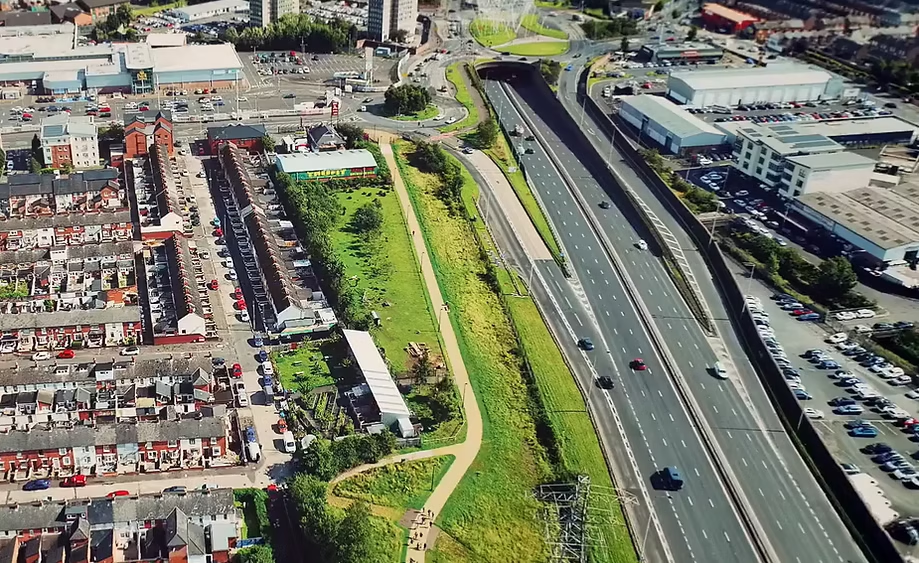
Aerial picture of St James' Community Farm on Rodney Parade 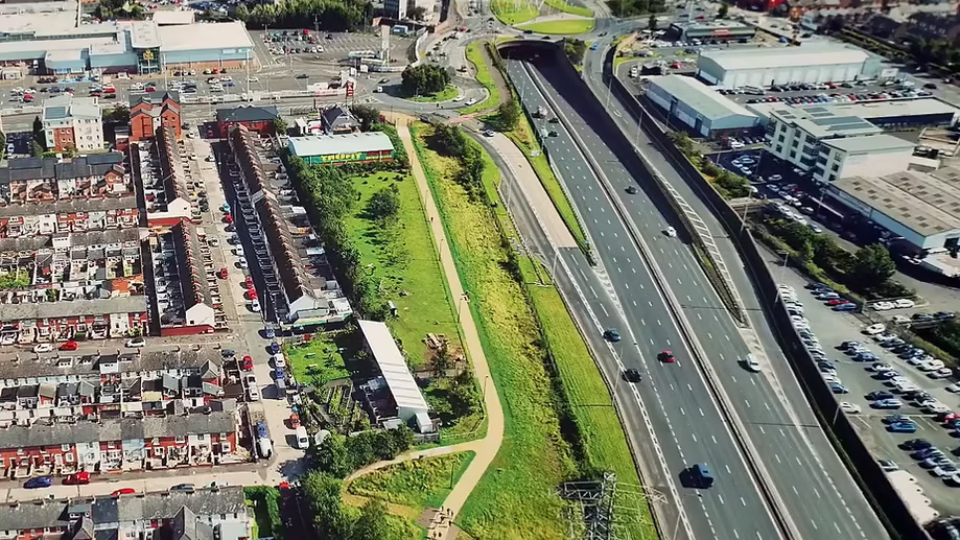
The community farm is a model of community-led sustainability.
From encouraging the public to recycle cans to collecting rain water and re-using wood, being eco-friendly is an important ethos of St James' Farm.
Damien Linsday says they have helped recycle over three million cans to date.
"We rely heavily on recycling and getting people involved in the community and the biggest part of that is the cans," he explained. "To date, we have recycled over three million cans in four years which is brilliant.
-
Thomas McIlhone and Damien Lindsay empty the latest donation of cans 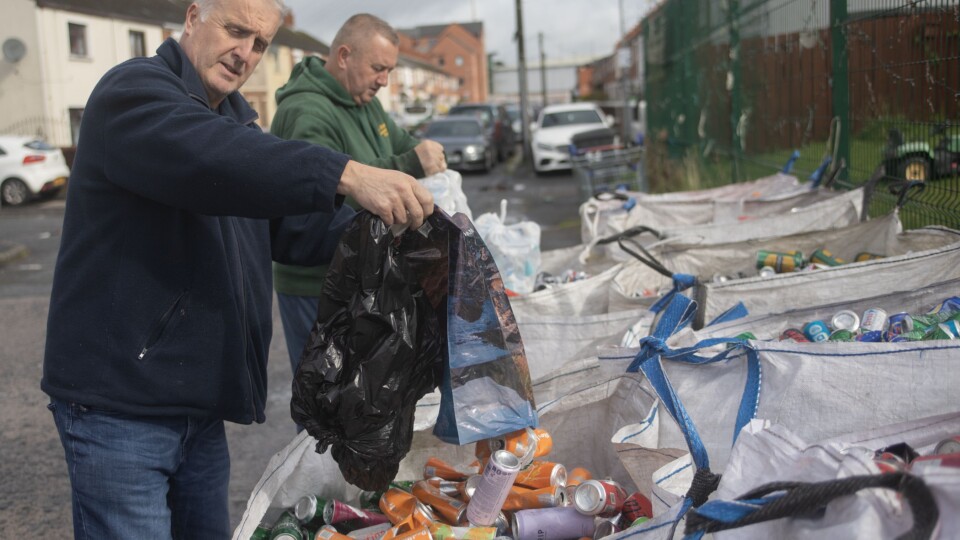
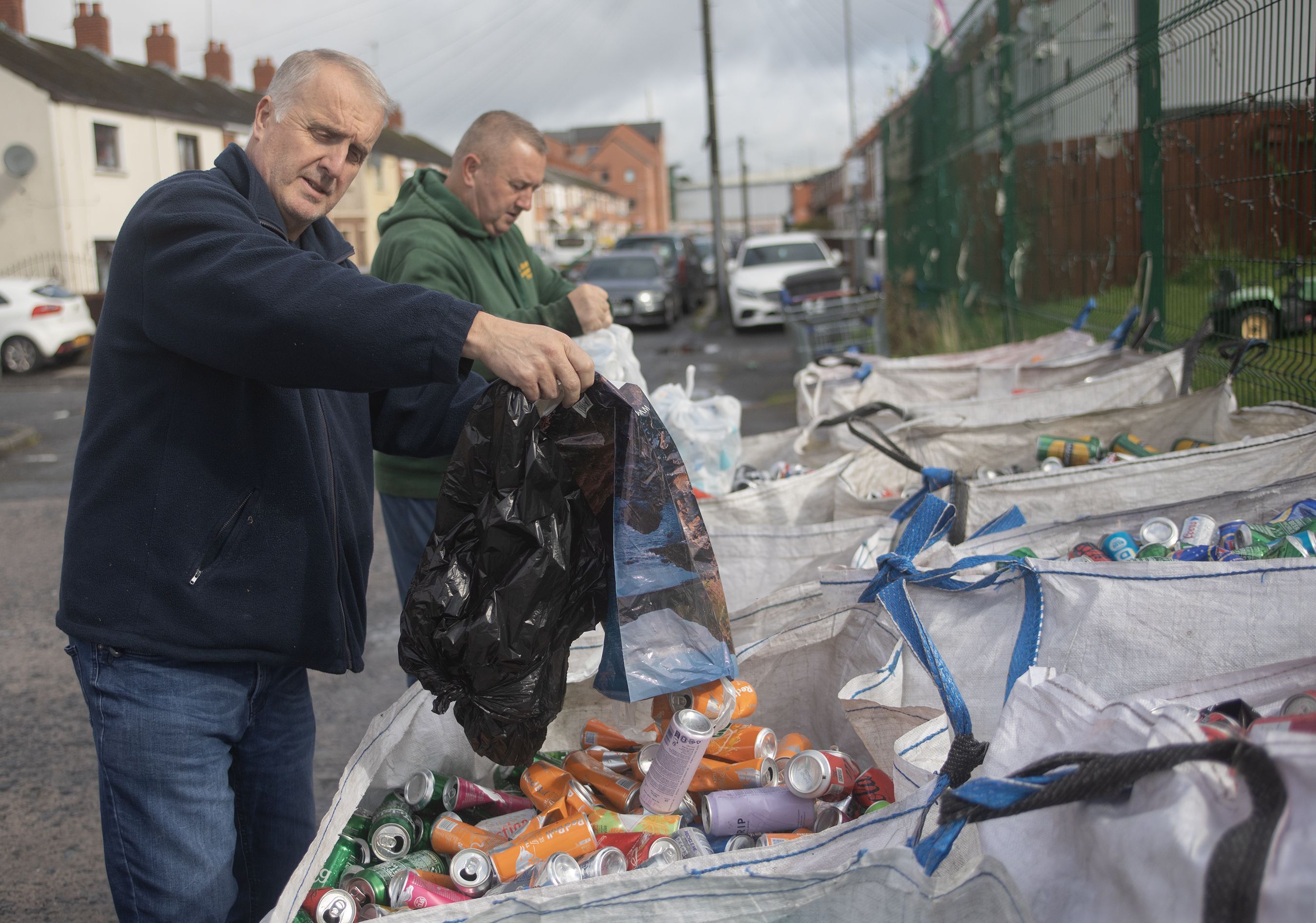
"It sustains the farm and keeps all the community involved as well.
"We get between 12 and 16 tonne bags every week and they go to two metal companies.
"It works out about 55p per kilo which is about £8 a tonne. It probably doesn't sound much but it really adds up and helps sustain the farm. The money goes towards paying running cost bills, paying for hay, paying for food, paying for vet bills.
"We always tell people every week what money made from recycling cans goes towards and it gives us all a lift.
"People see a real difference in it. People come from as far as Derry and Tyrone."
Being in a climate that is never short of rain, St James' Farm also saw an opportunity to collect rain water to cut costs on water charges.
"We have a water metre here so our bills are about £1,000 a year, so we try and half that," added Damien.
-
Young St James' Farm volunteer Rojin Dikmen collects rain water for use in the farm 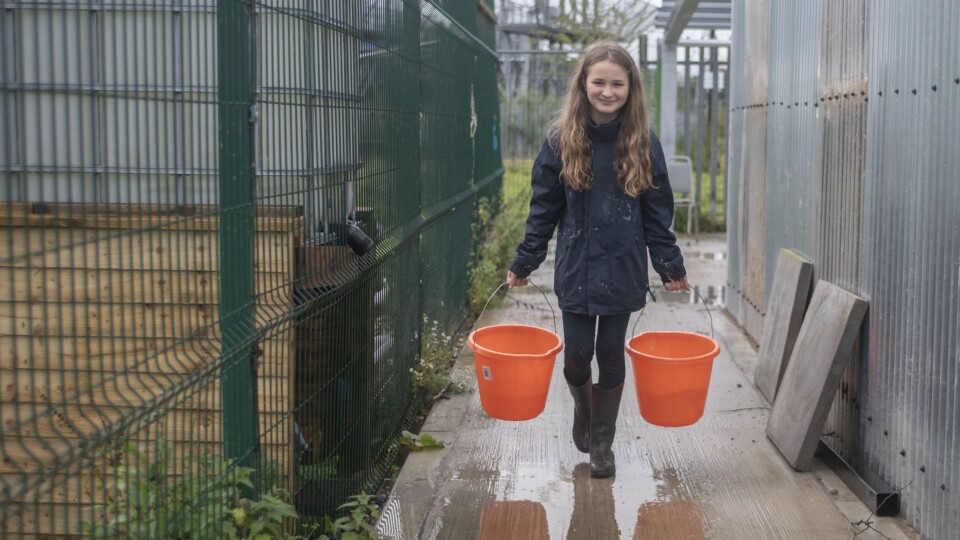
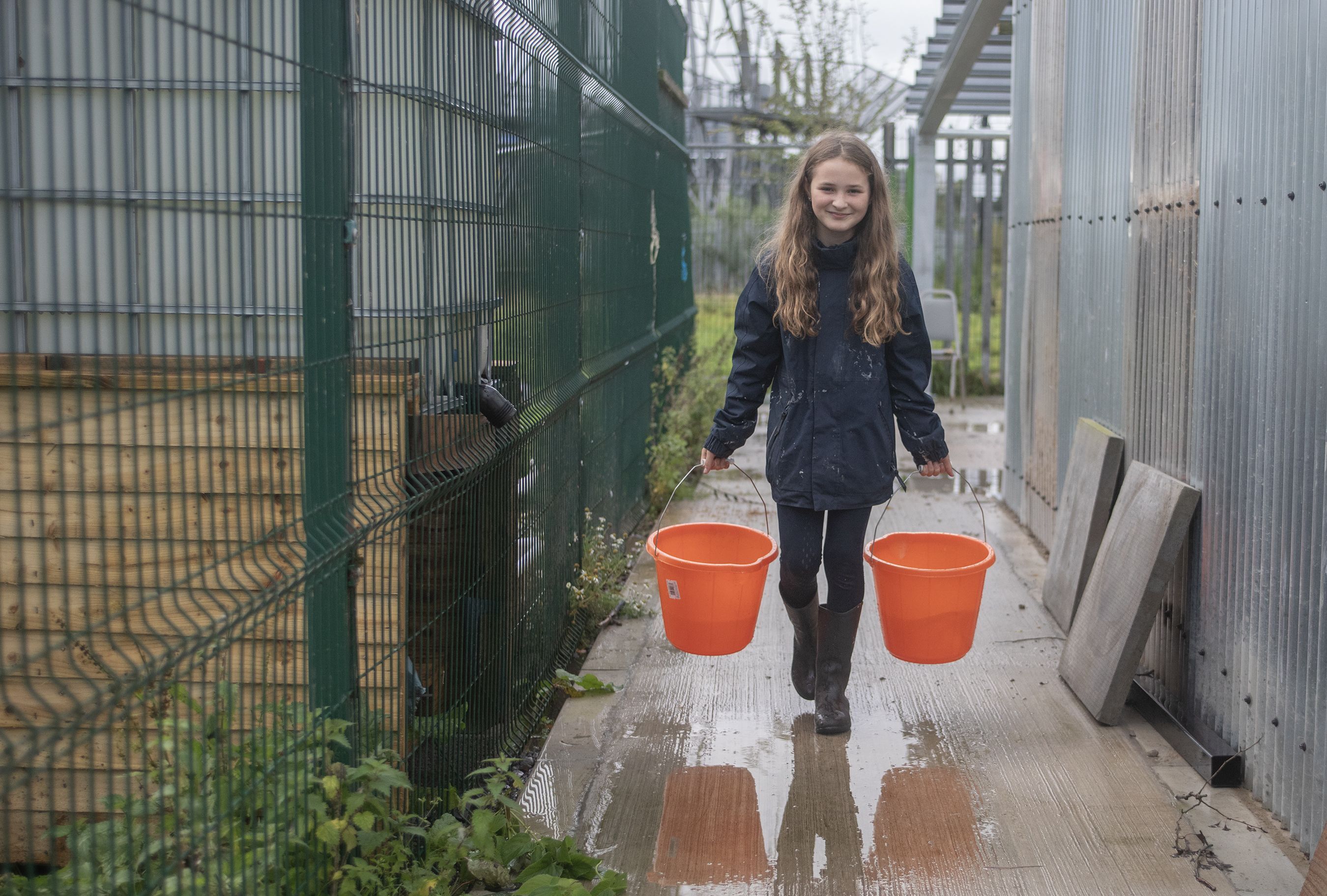
"We've installed water tanks to collect the rain water and we try to encourage the volunteers as much as we can to not use the hose and to fill up buckets of water instead.
"Obviously, we're in Ireland and it's rainy, so you could probably fill 20 water buckets but we only have so much space.
"We're in the process here of building a green roof to keep the ecosystem going and we want to install solar panels to reduce our electricity bill. It is helping both the environment and ourselves."
Damien also explained how the farm welcomes old wooden items, which can be turned into something new including flower bed furniture and hanging baskets.
"We also have a scheme called Pallets for Profits. We have a couple of really skilled joiners and builders who come in a couple days a week to make stuff with the pallets like benches, hanging baskets and other things.
"Julia is our artists and helps out with designs. It is better than simply throwing wood away because it can be used again.
"Sustainability is good for the enviornment and for the farm itself to make a few quid which goes back into the farm and helping the animals.
"Everything is about recycling and re-using here at St James' Farm."