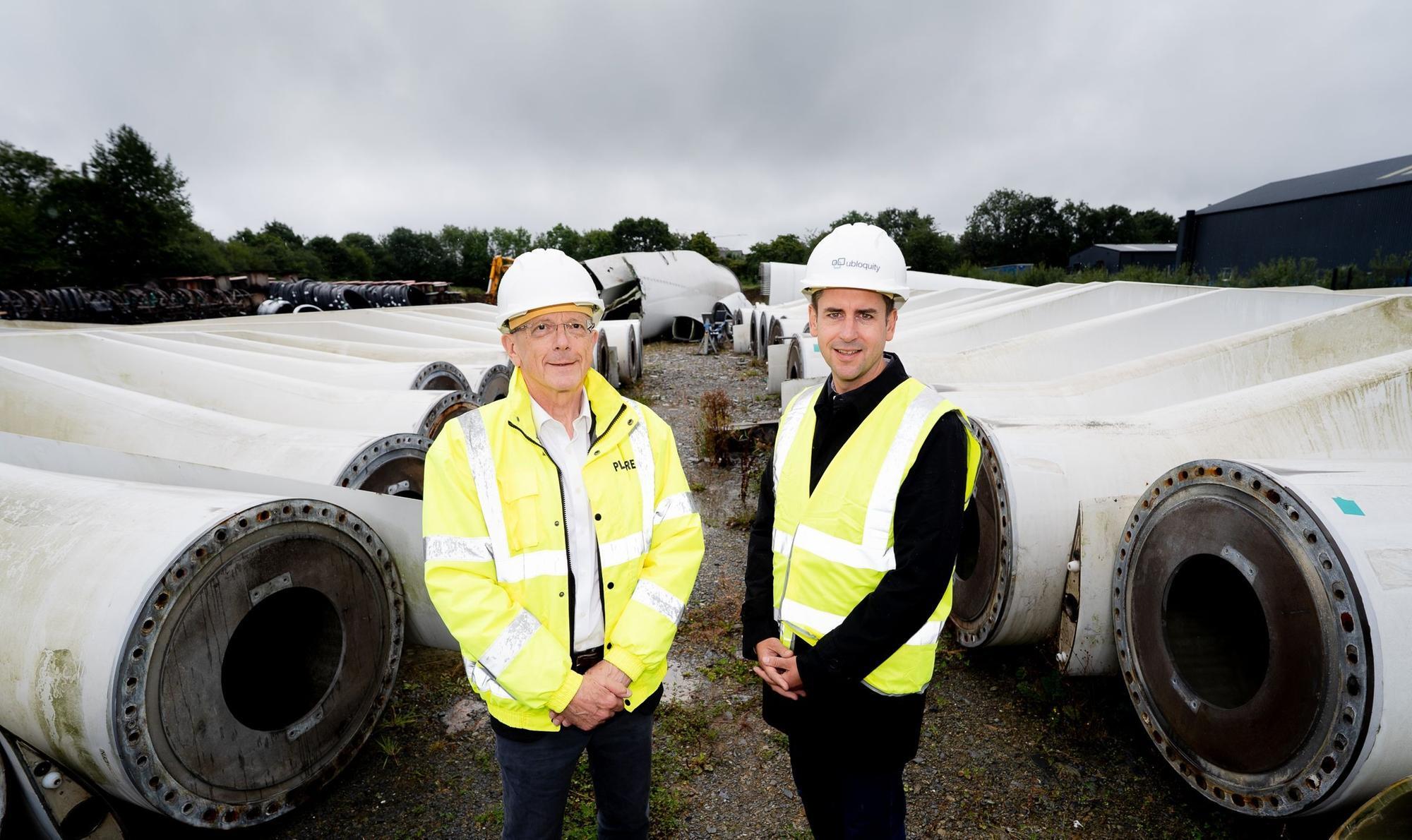
A strategic collaboration between Lurgan-based Plaswire Limited and technology company ubloquity, has developed a scalable solution for recycling end-of-life onshore wind turbine blades.
The partnership reached a significant milestone through a successful pilot project at the renewable energy owned by Danish energy company Ørsted, Owenreagh Wind Farm in County Tyrone, where decommissioned blades were recovered, transformed into new products and digitally tracked throughout their lifecycle.
Challenge
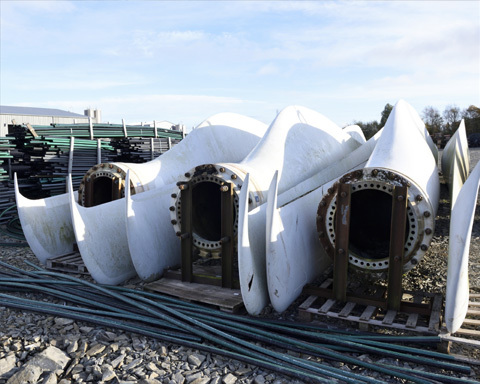
Wind turbine blades are manufactured from lightweight composite materials designed to withstand decades of exposure to harsh environmental conditions. While this durability is essential during operation, it also makes the blades difficult to recycle once they reach the end of their 20-to-30-year lifespan.
According to Plaswire CEO Andrew Billingsley, "Europe is expected to generate approximately 350,000 tonnes of end-of-life wind turbine blades by 2030". Although up to 95% of a wind turbine can already be recycled, composite blades remain one of the renewable energy sector's most significant circular economy challenges, with many still disposed of through landfill or incineration.
Solution
Plaswire developed a cost-efficient recycling process that cleans, shreds and granulates 100% of the decommissioned wind turbine blades. This granulated material is transformed into RX Polymer, a recycled material used as an alternative to virgin plastics in construction and other industrial applications.
To strengthen supply chain transparency, technology company ubloquity introduced Digital Product Passports (DPPs) using blockchain, RFID, Internet of Things (IoT) and AI technologies. The system enables recycled materials to be tracked from the original wind turbine blade through processing and into new products, supporting traceability, ESG reporting and supply chain transparency.
Outcome
Following the successful pilot, Plaswire expanded its operations, employing 14 people at its Lurgan facility while investing in additional land and larger processing equipment to prepare for increasing volumes of decommissioned wind turbine blades.
According to the company, processing blades within Northern Ireland reduces the need to transport composite waste overseas and avoids approximately 2.7 tonnes of CO₂ emissions for every tonne of material diverted from incineration.
Although developed for the wind energy sector, the approach has potential applications across industries that generate composite waste, including aerospace, defence and advanced manufacturing.