The Office for Environmental Protection (OEP) has published its first statutory assessment of Northern Ireland's Environmental Improvement Plan (EIP).
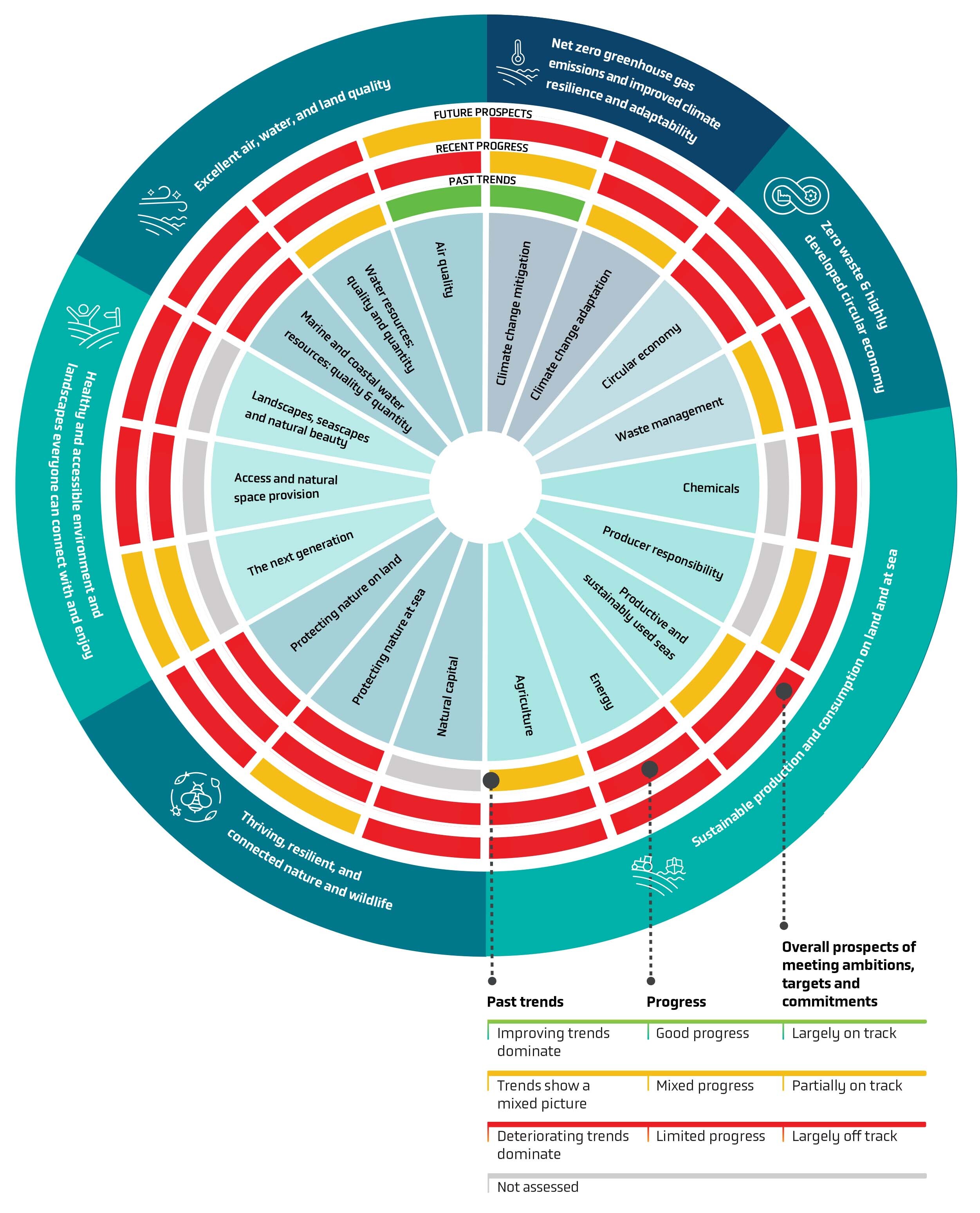
The report covers 38 individual targets and outcomes across air, water, nature, climate and resource use. Of these, 26 are assessed as largely off track, six are partially on track, and only three are currently largely on track.
Areas for Concern
The assessment highlights several areas where progress remains limited. Nutrient pollution from agriculture and wastewater continues to place significant pressure on rivers, lakes and coastal waters, with Lough Neagh identified as a clear example of wider environmental challenges.
Progress towards renewable energy has also slowed, with renewable electricity falling from 47% of gross final consumption in 2020 to 44% in 2025, leaving the 2030 target increasingly difficult to achieve.
The report also points to continued biodiversity decline, noting that one in 12 species is at risk of extinction and many protected sites remain in unfavourable condition.
Professor Robbie McDonald, the OEP's Chief Scientist, said: "While some progress has been made, substantial challenges remain and the prospects of achieving EIP ambitions, targets and outcomes are largely off track. However, prospects are not fixed and there are clear opportunities to deliver improvements."
Systemic Barriers to Progress
Speaking during the OEP briefing, Head of Assessments Dr Cathy Maguire identified several systemic barriers affecting delivery of the Environmental Improvement Plan.
These include delays to key policy frameworks, including the Ammonia Strategy, Marine Plan and Circular Economy Strategy, alongside fragmented governance arrangements that limit coordination across government departments.
The assessment also identifies a lack of funded delivery plans for several major environmental pressures, with resource constraints, including staffing and funding, continuing to affect implementation.
In addition, the OEP notes that wastewater infrastructure remains a significant gap within the Environmental Improvement Plan despite its importance in improving water quality outcomes.
What happens next?
The OEP's recommendations focus on accelerating action in three priority areas: reducing nutrient pollution from agriculture and wastewater, progressing circular economy policy, and strengthening nature recovery to support 2030 environmental targets.
With several statutory and international environmental commitments approaching, the report concludes that stronger action will be required if Northern Ireland is to meet its long-term environmental objectives.