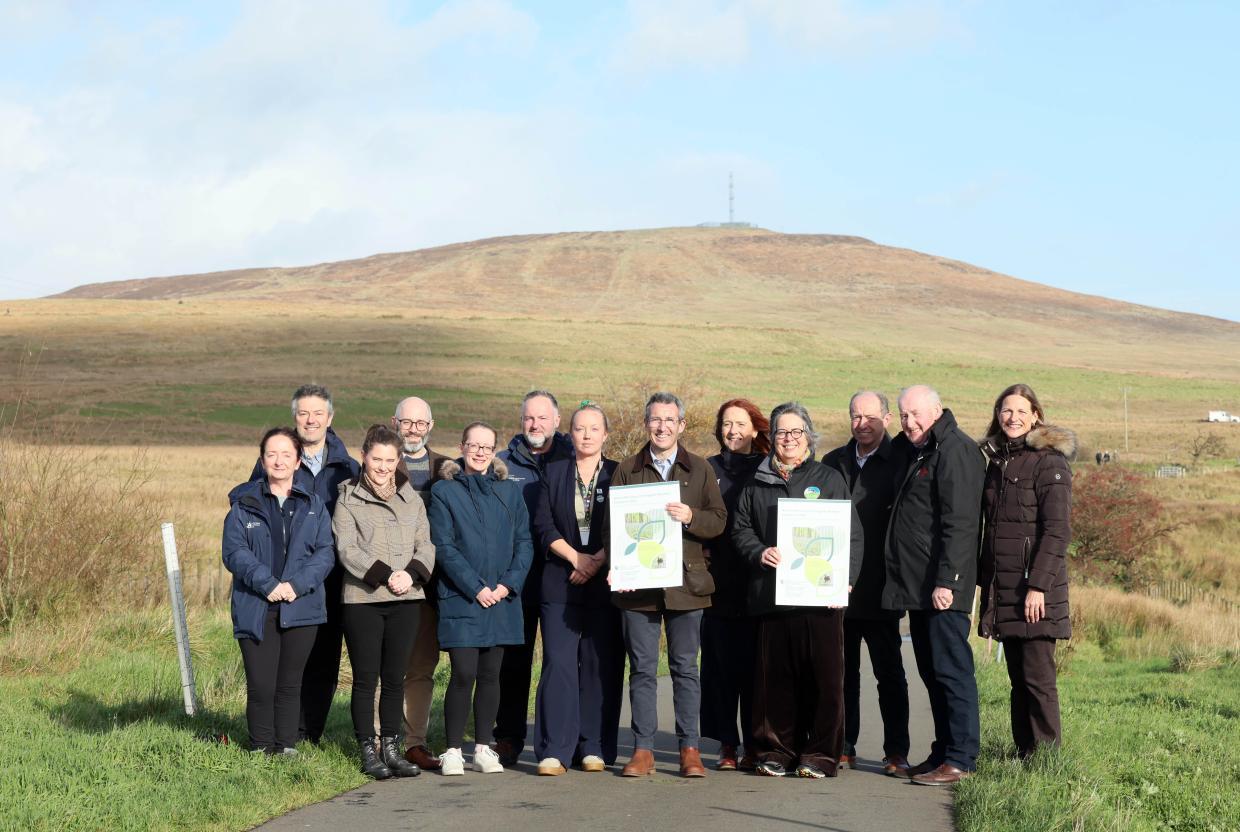
Environment Minister Andrew Muir MLA has launched Northern Ireland’s Nature Recovery Strategy to 2032, establishing a statutory roadmap to halt biodiversity loss and put local councils, private businesses and communities at the core of ecological restoration.
The strategic framework supports delivery of the international "30by30" target to effectively conserve and manage 30 per cent of terrestrial, inland water and coastal marine areas for nature by 2030.
The launch comes against a backdrop of severe ecological pressure across the region.
Around 40 per cent of flora and fauna in protected sites currently fall short of favourable condition, while only one of Northern Ireland's 49 priority habitat types enjoys favourable conservation status.
“We must put nature back at the heart of everything we do, because when nature thrives, people flourish. Nature supports the food we produce, the water we drink and the air we breathe. It is essential to a strong economy, healthier communities and a more resilient Northern Ireland” said Minister Muir.
Statutory Duties and Spatial Frameworks for Councils
Local councils will play a pivotal role in driving regional recovery through land management, planning decisions, local environmental policy and green infrastructure.
Under the Wildlife and Natural Environment Act (Northern Ireland) 2011, public bodies are already operating under a statutory Biodiversity Duty to further the conservation of biodiversity.
To strengthen transparency, DAERA will consult in 2027 on making implementation reporting mandatory for all public bodies, targeting Executive support for legislation by 2030.
To guide local authority land-use decisions, the strategy commits to delivering a comprehensive Land Use Framework by 2028.
Additionally, DAERA will review options by 2028 for adopting a Biodiversity Net Gain approach within the planning system.
Commercial Finance Mechanisms and TNFD Frameworks for Businesses
The strategy creates structured mechanisms for private enterprise to measure, finance and reduce nature-related risks across supply chains.
To bridge the conservation investment gap, DAERA will produce a Biodiversity Finance Plan by 2028 to mobilise both public and private finance for nature restoration.
By 2029, the Department will establish a framework to adopt British Standards Institution (BSI) Nature Standards, enabling high-integrity environmental markets to attract private investment.
Commercial organisations are encouraged to adopt the Business & Biodiversity Charter Mark, delivered by Business in the Community NI and Ulster Wildlife, which provides a tiered framework aligned with Taskforce on Nature-related Financial Disclosures (TNFD) guidelines.
Community Action and All-Island Cooperation
Minister Muir emphasised that government cannot deliver ecological recovery in isolation, announcing the creation of a cross-societal Nature Recovery Forum, bringing together environmental organisations, landowners, businesses and community groups.
To support local community projects, DAERA will launch a successor to the Environment Fund in 2027, distributing grants from 2028 onwards.
Practical community interventions highlighted in the strategy range from citizen science and local pollinator havens to installing swift nesting bricks and bat ridge roosts directly into new and existing building developments.
The strategy also points to successful landscape-scale models, such as the Curlew LIFE project in Lough Erne and the Antrim Hills, peatland restoration at Mullaghcarn ASSI, and cross-border partnerships including the All-Island Pollinator Plan and the Shared Island Invasive Species and Biosecurity Initiative.