The UK government has launched what it calls the biggest public investment in community energy in the country's history.
The Local Power Plan, published in February 2026 by the Department for Energy Security and Net Zero and Great British Energy (GBE), commits up to £1 billion to help communities and local councils across the UK develop their own renewable energy projects.
The vision is straightforward: by 2030, every community in the UK should have the opportunity to own a local energy project.
What is being offered?
The plan provides a mix of grants, loans, expert advice and regulatory reform.
Communities can apply for grants to carry out feasibility studies or get early-stage projects off the ground. Loans will be available for construction and shared ownership - where a community buys a stake in a larger renewable development nearby.
GBE is also building an advisory service and developing a Community Energy toolkit of templates and guidance, aimed at groups who may have enthusiasm but limited experience of the energy sector.
A target has been set to support more than 1,000 local and community energy projects by 2030.
What about Northern Ireland?
Northern Ireland is referenced in the plan, though with less detail than Scotland or Wales - both of which already have established community energy support programmes.
GBE has already invested £21.5 million in partnership with the devolved governments, including funding for Further Education colleges here. The plan says GBE will work with the NI Executive to design a "tailored approach" linked to the Executive's upcoming Community Energy Policy Framework.
The plan also highlights Project Girona in Coleraine as an example of what is possible. That project installed solar panels and battery storage on 60 properties and reduced household electricity bills by 40-60%.
There is a commitment to work with SONI and NIE Networks on how community energy can be supported across Northern Ireland's grid.
What are the concerns?
The main concern is timing and detail. Much of the proposed support is being developed primarily around structures in England. How these will work within Northern Ireland's distinct energy market and regulatory environment is still to be confirmed.
The NI Executive's Community Energy Policy Framework, which the plan treats as a key building block, has not yet been published. Without it, there is a risk that Northern Ireland falls behind Scotland and Wales in accessing support.
Community energy groups here have consistently pointed to grid connection as a major barrier. The plan acknowledges this but stops short of concrete commitments specific to NI.
What happens next?
GBE has opened an Expression of Interest process, inviting communities, councils and public sector organisations to come forward with project ideas.
Full details of the funding products are expected in the GBE Capital Toolkit, due in summer 2026.
For Northern Ireland, the most important next step may be the publication of the Executive's Community Energy Policy Framework. Until that is in place, the scale of what the Local Power Plan can deliver here will remain uncertain.
Express your interest at Great British Energy.
For more on community energy in Northern Ireland, visit NI Community Energy, Community Energy NI, or Sustainable Energy Communities NI.
Looking for something?
To search, start typing and hit enter.

Article
Article
UK Commits Up to £1bn for Community Energy — What Does It Mean for NI?
The UK government has launched its Local Power Plan — the largest public investment in community energy in British history. With up to £1 billion committed through Great British Energy, the ambition is bold. But what does it actually mean for communities here in Northern Ireland?

Nichola Hughes
Executive Director
Posted
18th Feb, 2026
Length
5 minute read
Type
Opinion Piece-
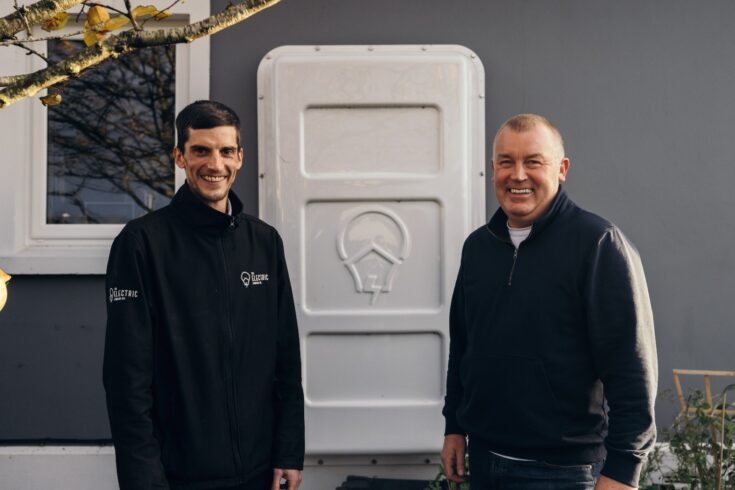
Community energy projects like Northern Ireland's first smart grid in Coleraine could benefit from new UK-wide funding. 
Tags