Public bodies across Northern Ireland have reached a significant milestone in climate action, with the successful completion of the first reporting cycles under the Climate Change (Reporting Bodies) Regulations (Northern Ireland) 2024.
The achievement was recognised at a Department of Agriculture, Environment and Rural Affairs (DAERA) event held at Stormont on 11 June 2026.
This event brought together representatives from local government, health and social care, education, emergency services and other key public service organisations.
Looking for something?
To search, start typing and hit enter.

Article
Article
Public Sector Bodies Mark Milestone in Climate Change Reporting
Northern Ireland’s public sector completes first statutory climate reporting cycle.

Katherine Kelly
Communications & Advisory
Posted
15th Jun, 2026
Length
2 minute read
Type
News-
Representatives from Northern Ireland's public sector gathered at Stormont to mark the completion of the first statutory climate reporting cycle 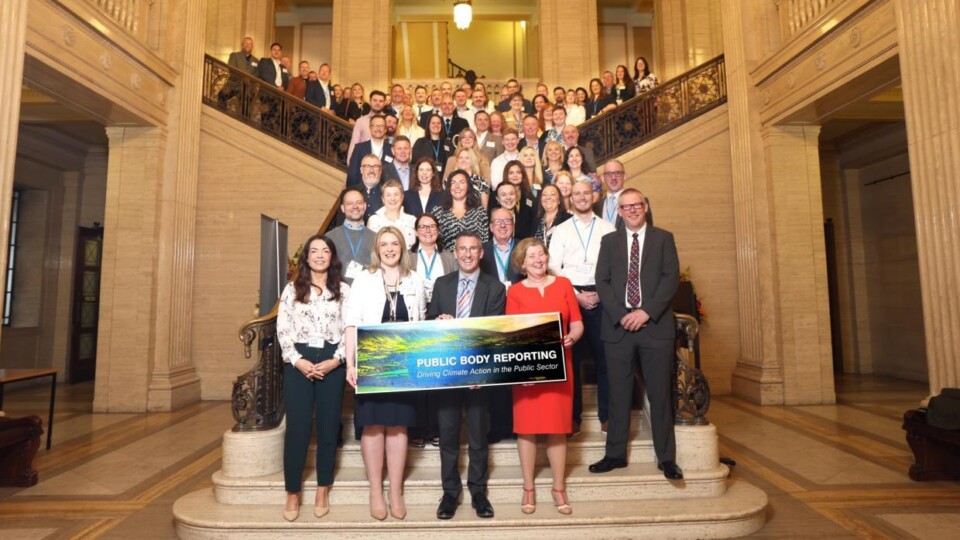
First Statutory Reporting Cycle Completed
Under the regulations, designated public bodies are required to report on greenhouse gas emissions, climate change mitigation activities, climate risks and adaptation measures.
All 40 designated reporting bodies successfully met their statutory reporting requirements, with two additional organisations choosing to participate voluntarily.
The completion of the first reporting cycle marks an important step in implementing Northern Ireland's Climate Change Act and strengthening the role of the public sector in responding to climate challenges.
Building a Stronger Evidence Base
For the first time, Northern Ireland now has a consistent and structured evidence base on emissions, risks and responses across its public sector.
The reports provide valuable insight into how organisations are managing climate-related risks, reducing emissions and preparing for the impacts of a changing climate.
They also establish a baseline against which future progress can be measured, helping to inform policy development, investment priorities and long-term climate planning.
The reporting process is expected to play an important role in improving transparency, accountability and decision-making across the public sector.
Speaking at the event, DAERA Minister Andrew Muir highlighted the importance of public sector leadership in addressing climate change:
“The public sector has a crucial leadership role in responding to climate change, both within its own operations and in supporting the wider transition to a net zero, climate-resilient Northern Ireland.”
The Stormont event also provided an opportunity for organisations to share experiences from the first reporting cycle, including successes, challenges and lessons learned.
This exchange of knowledge is expected to help build capacity across the public sector, supporting organisations to strengthen climate governance, identify opportunities for emissions reduction and improve resilience to future climate impacts.
Looking Ahead
DAERA is currently reviewing the submitted reports and will publish a summary of key findings alongside the full reports.
The findings will help inform future climate policy and support Northern Ireland's transition towards a low-carbon, climate-resilient future.
As reporting cycles continue, the information gathered will provide an increasingly valuable resource for tracking progress, identifying emerging challenges and supporting evidence-based climate action across the public sector.
Tags