Plan to Restrict Daytime Private Traffic
A major rebalancing of Belfast City Centre’s transport network will see core retail streets closed to general through-traffic during daytime hours, under the Department for Infrastructure’s (DfI) Eastern Transport Plan 2035 (ETP 2035) draft consultation.
The 12-week public consultation is now open and will run until 25 January 2027, 5pm.
The intervention aims to eliminate cross-city "rat-running". This is where drivers use central streets as a shortcut rather than accessing city centre destinations.
Without strategic intervention, traffic delays in Belfast City Centre are projected to surge by more than 50% by 2035, compared to 2023 levels.
At the core of the infrastructure overhaul is the Civic Spine, a continuous, high-quality walking, wheeling and active travel priority route. Designed to connect York Street, Royal Avenue, Donegall Place, Donegall Square, Bedford Street, Dublin Road and Botanic Avenue.
'Putting People First'
Infrastructure Minister Liz Kimmins reaffirmed her commitment to reshaping urban spaces to foster healthier and more vibrant communities.
'When I came into office, I set out my Department's Seven Foundations for a Better Future. These included creating cleaner, greener, town centres through a person-centred approach to all we do over the next decade," stated Minister Kimmins.
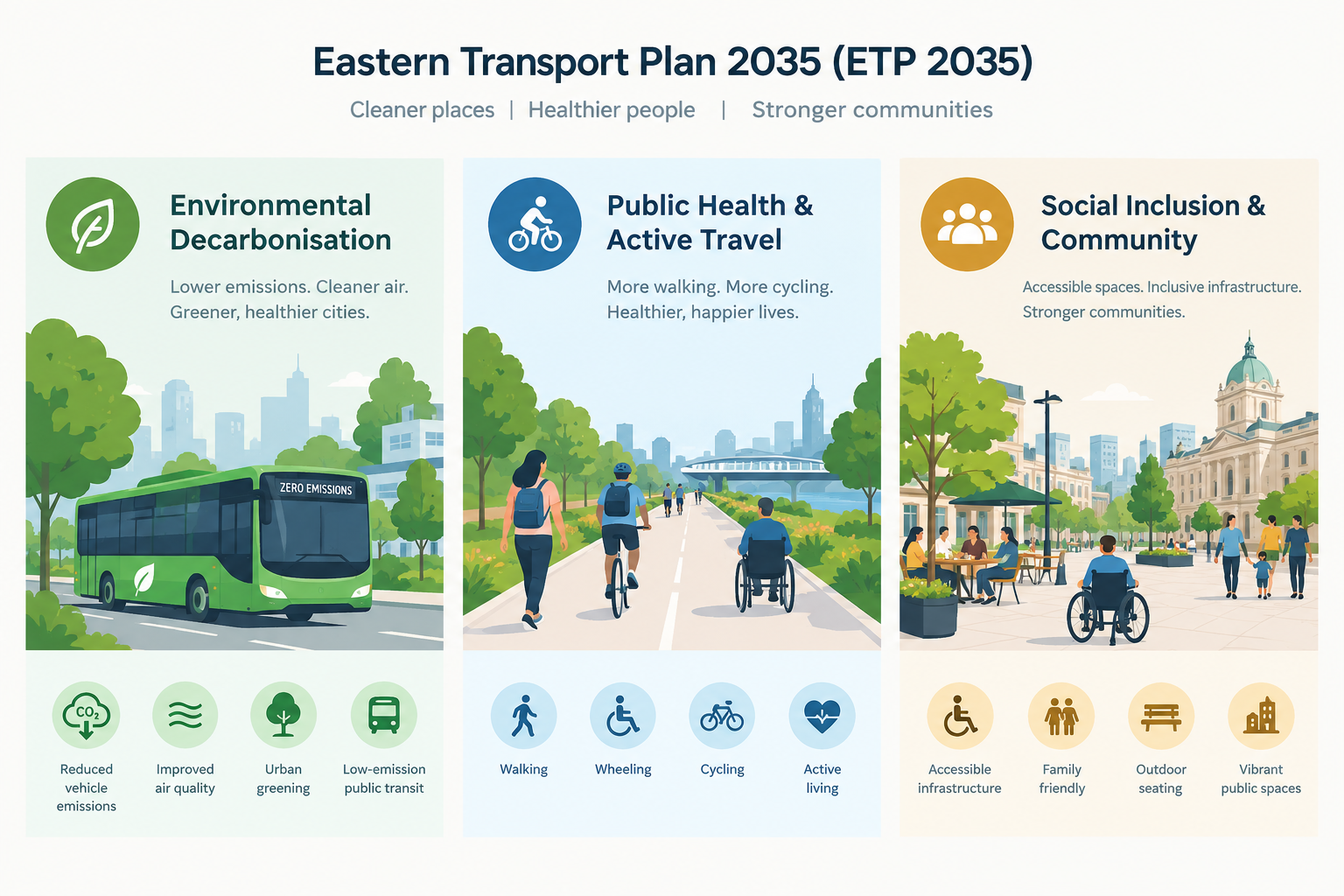
"It is my ambition to reshape our town and city centres to put people first, creating more attractive, accessible and vibrant places while reducing car dependency and encouraging sustainable travel choices," she added.
Minister Kimmins pointed to the dramatic success of the recent Fleadh Cheoil na hÉireann festival in Belfast as clear proof of the benefits of active travel spaces.
She said no decisions have yet been taken and encouraged the public to respond to the consultation.
Key Proposals
The ETP 2035 sets out physical and operational changes across the city core:
- 20mph zone across all city centre streets (excl. Westlink/M2 /M3)
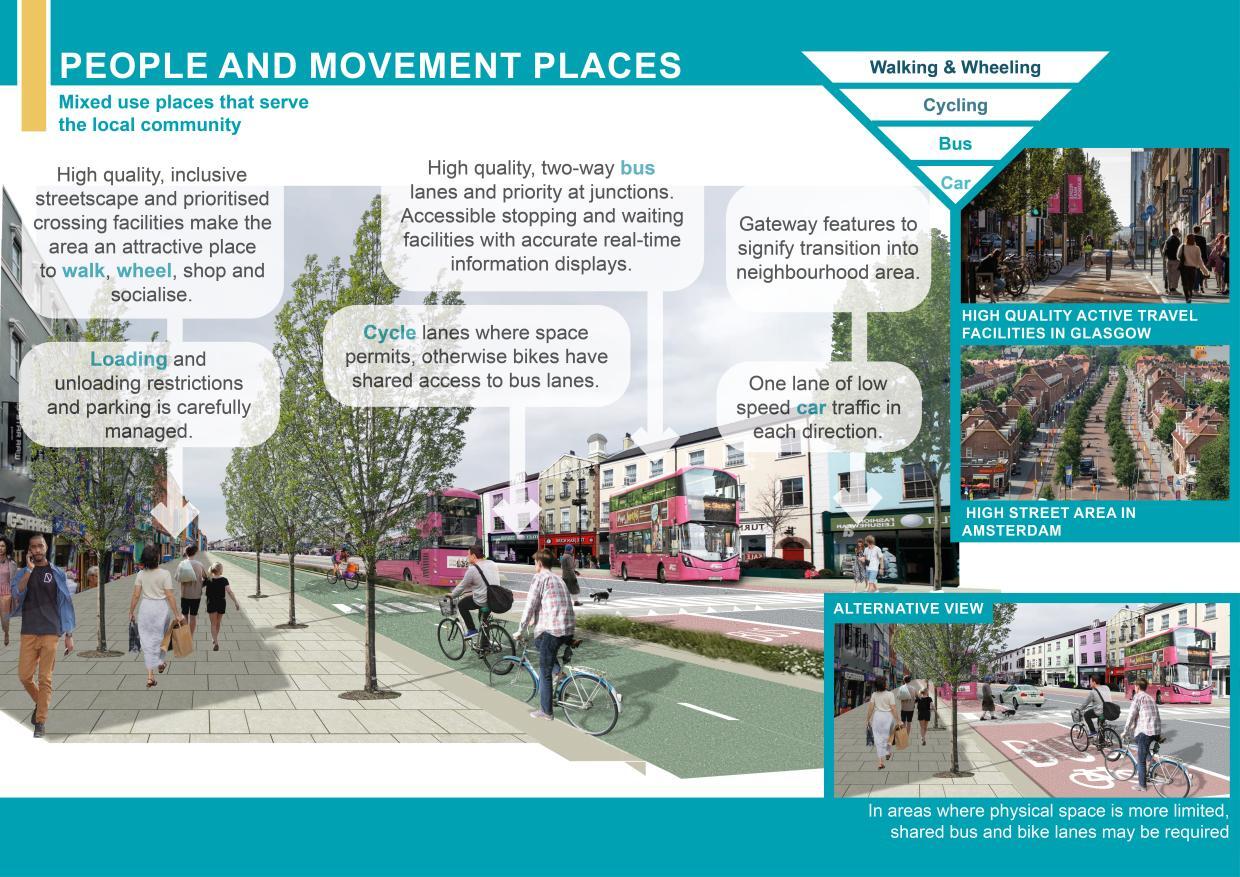
- Nearly 10km of new protected cycle routes
- Approximately 13km of new bus lanes
- Relocation of bus layovers away from City Hall to unlock space for seating, greening and public realm
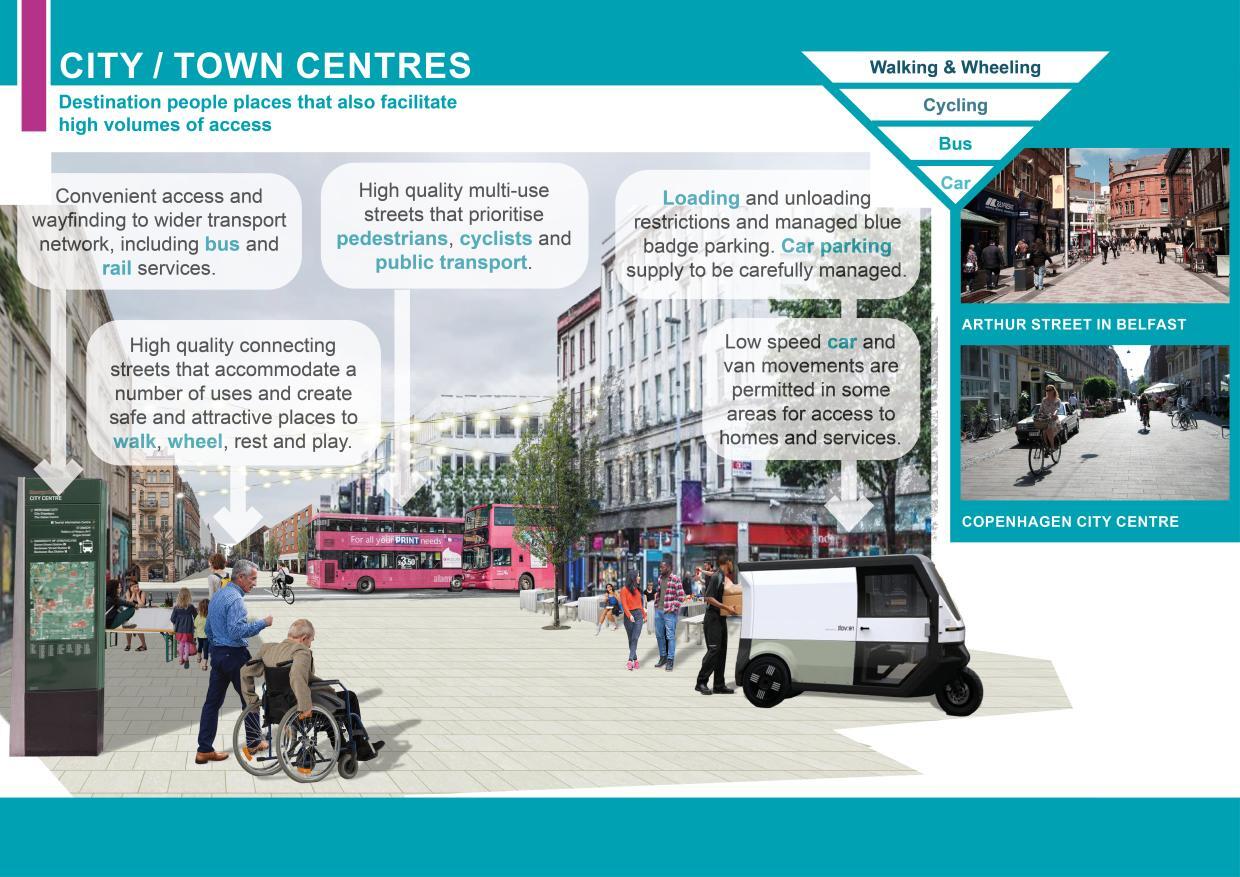
- General traffic prohibited in core retail areas between 07:00 and 19:00
- Reallocation of on-street parking spaces toward active travel lanes and public amenity spaces, while expanding dedicated Blue Badge parking spaces
North & South Travel Hubs and 'Far-Siding' Bus Route
To support multi-modal transit, the plan establishes two new major Travel Hubs located to the north and south of the city centre, that will feature:
- Belfast Bike Hire and Secure Cycle Storage for onward active travel journeys
- Free Shopmobility Services providing wheelchairs and mobility scooters
- Micro-Consolidation Freight Depots enabling last-mile goods deliveries via e-cargo bikes to cut commercial vehicle emissions in pedestrian zones
Environmental, Health and Social Impact