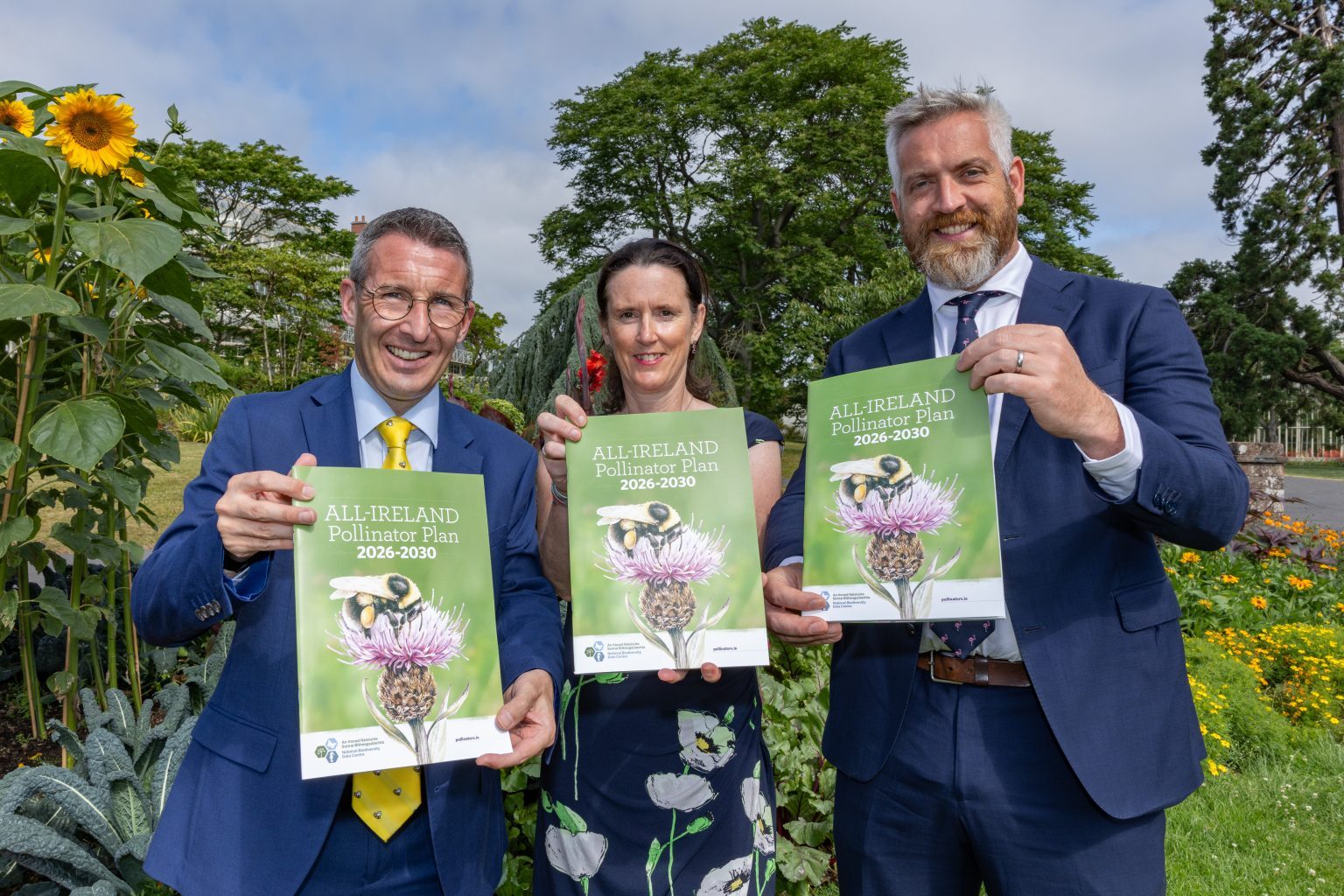
A new five-year strategy to reverse the decline of bees, moths and other pollinating insects across the island of Ireland has been launched, aiming to create nature-friendly habitats every 200 metres by 2030.
The third All-Ireland Pollinator Plan (AIPP) 2026-2030 builds on a decade of conservation work and provides a roadmap for farmers, businesses, local authorities, community groups and public bodies to restore biodiversity.
The voluntary framework, launched at the National Botanic Gardens in Dublin, supports delivery of Northern Ireland's Environmental Improvement Plan and forthcoming Nature Recovery Strategy (2026-2032).
Pollinators play a vital role in food production, biodiversity and healthy ecosystems. However, their populations continue to decline because of habitat loss, climate change and pollution.
Currently, one-third of the 102 wild bee species on the island are threatened with extinction. Since 2012, common bumblebee populations have seen a year-on-year decline of 2.7%.
A new GIS-based mapping platform, Actions for Pollinators, will help monitor progress by allowing organisations and individuals to record pollinator-friendly actions.
Where habitats are created within 200 metres of one another, the system automatically maps connected nature corridors, reflecting the limited foraging range of many solitary bee species.
To achieve this, the plan focuses on:
- Farmland: Encouraging farmers to use the Farmland Pollinator Tool.
- Public Land: Managing council-owned spaces, transport corridors and utility networks as connected corridors.
- Communities: Supporting schools, sports clubs and faith groups to create connected networks of habitat.
- Businesses: Encouraging companies to embed evidence-based actions into their site management and value chain.
Progress will be measured against 50 strategic objectives and 75 success indicators throughout the lifetime of the plan.
To play your part in reaching the 200-metre connectivity goal visit pollinators.ie to access resources, log actions and or join the network.